Portfolio • Case Study 03
Atmos
What is it?
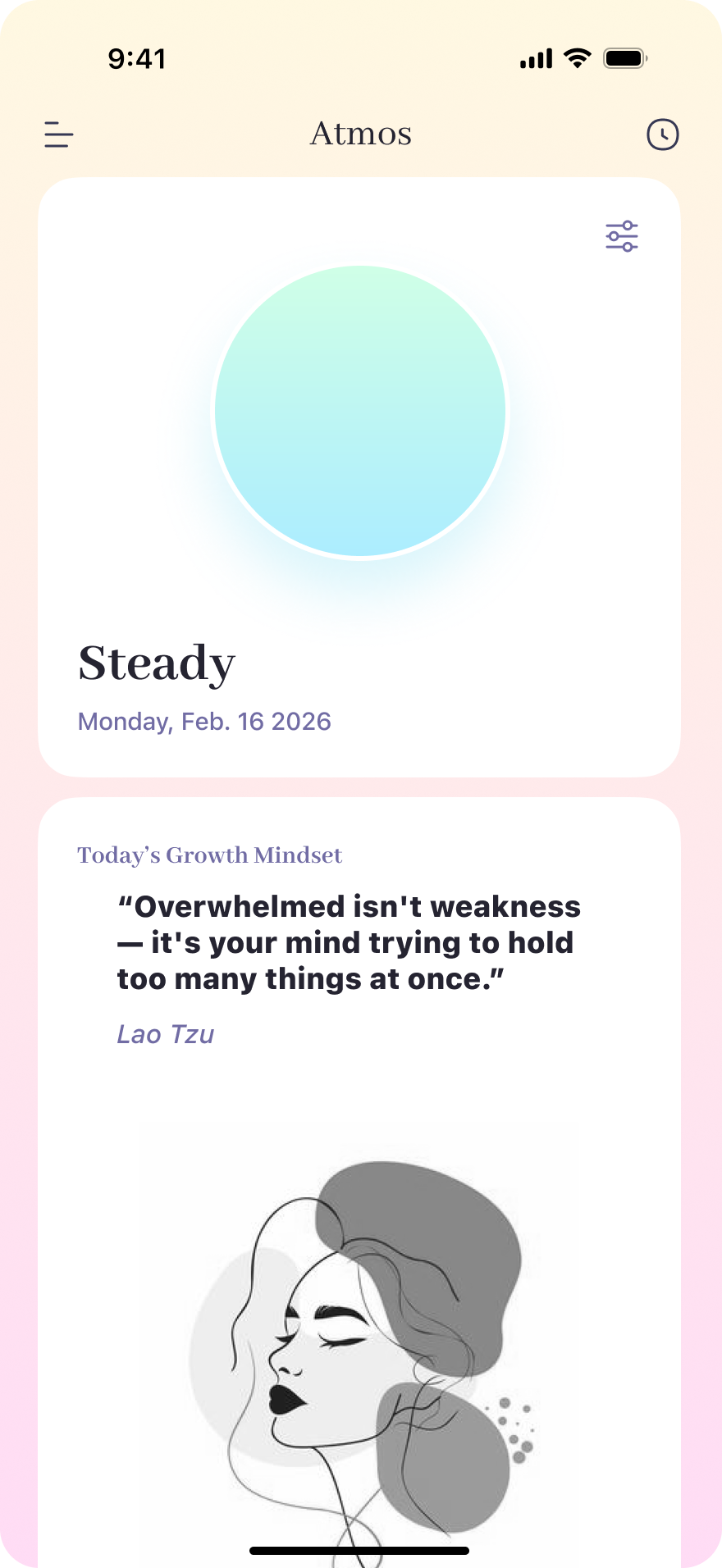
A daily check-in that gives a feeling form, a name and a color, and points to human help rather than playing therapist. Release waits on clinician review.


Problem framing
Mood apps tend to lean one of two ways. Trackers turn a feeling into a point on a scale and reward the streak: Daylio logs mood on five points, Bearable on one to ten. AI companions go the other way, into conversation that can sound like therapy, and that is where the category has stumbled. NEDA took its Tessa chatbot offline in 2023 after it gave weight-loss advice. Woebot retired its consumer app in 2025, its founder citing the cost of meeting FDA requirements. That August, Illinois barred AI from providing therapy without a licensed professional involved.
The closest precedent is How We Feel, from the Yale Center for Emotional Intelligence, which asks people to name a feeling from a grid of 144 words. Atmos keeps the naming and puts something before it: a shape and a color for a feeling that doesn’t have words yet.
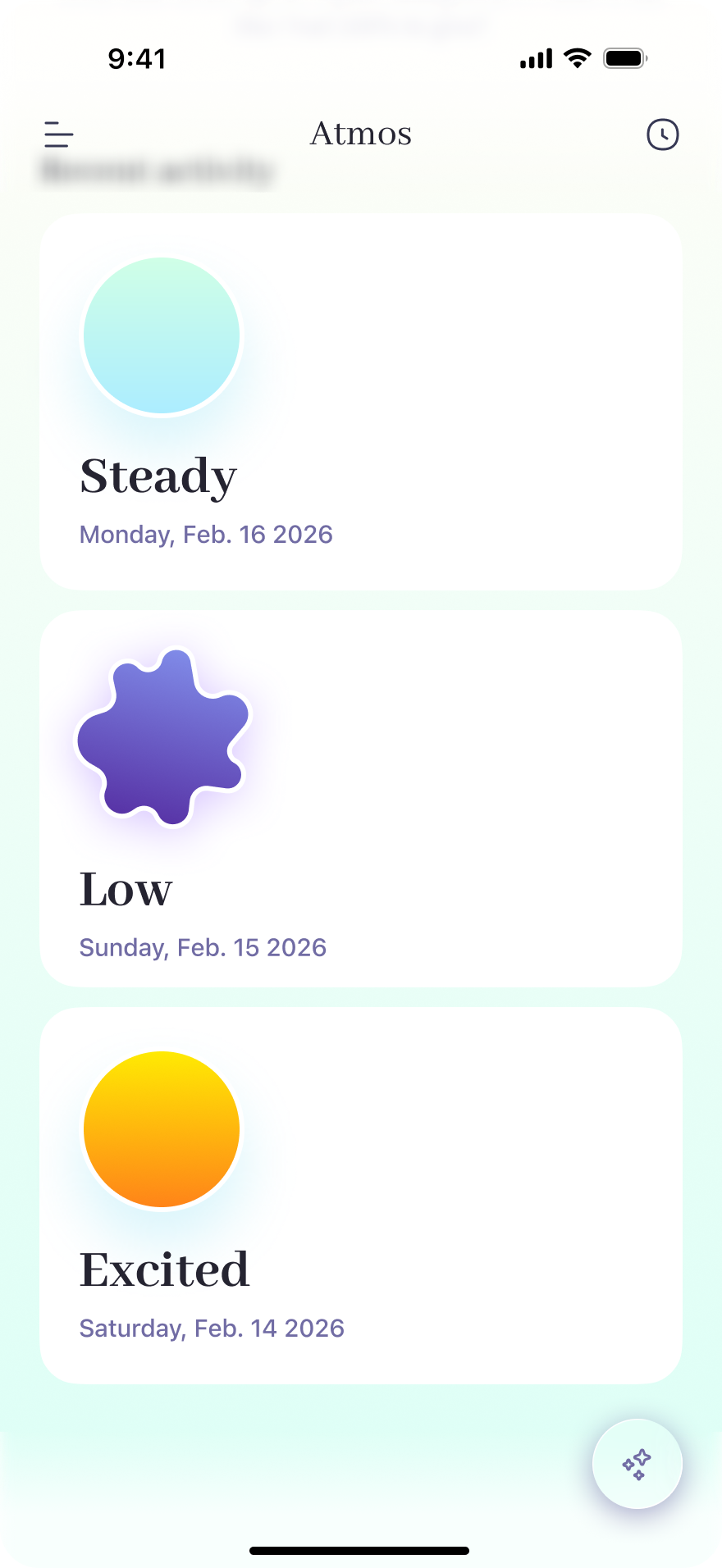
I built Atmos for myself and the people I love, around one question: what is the smallest daily practice that helps someone notice how they actually are? Research on affect labeling says naming an emotion changes how the brain holds it. So the ritual is simple: breathe, then give the moment a shape, a word and a color. The orb is the artifact; writing is optional.
And when someone may be in danger, the answer isn’t a smarter reply. It’s a path to a human.
- Daylio
- Five-point mood scale, streaks and achievements. Fast, but the feeling becomes a number.
- Bearable
- Mood rated one to ten next to symptoms, for correlations. Built for tracking, not noticing.
- Finch
- Self-care tasks feed a virtual pet, with streaks, though gentle about missed days. Motivation through play.
- How We Feel
- Names a feeling from a 144-word Mood Meter by energy and pleasantness. The closest precedent; Atmos borrows the naming.
- Wysa
- AI chatbot conversations with an SOS button for grounding, a safety plan and crisis lines; human coaching is a paid add-on.
- Woebot
- Retired its consumer app in June 2025; its founder cited the cost of FDA authorization.
Sources: Daylio, Bearable help center, Engadget on Finch, Yale on How We Feel, Wysa on SOS, STAT on Woebot, Engadget on Illinois, Psychiatrist.com on Tessa.
Research through use
Every morning was a test. The first version died on a slow build loop and on screens that split the check-in apart, breaking the one thing that mattered: the orb staying continuous. The rebuild is one screen, checked on a real phone before anything was called done. From there, repetition tuned the ritual:
- Numbers. The first slider had numbers, and I caught myself rating instead of noticing. It is now unlabeled and unscaled.
- Shape. The orb took many iterations to read as a soft, oily blob rather than a starburst. Once it did, it was locked.
- Color. The brand gradient never shifts with mood. Atmos doesn’t color-code feelings; you choose your own.
- Restraint. No streaks, points, diagnoses or assessments, written down as locked principles so they aren’t re‑litigated.


Solution as a system
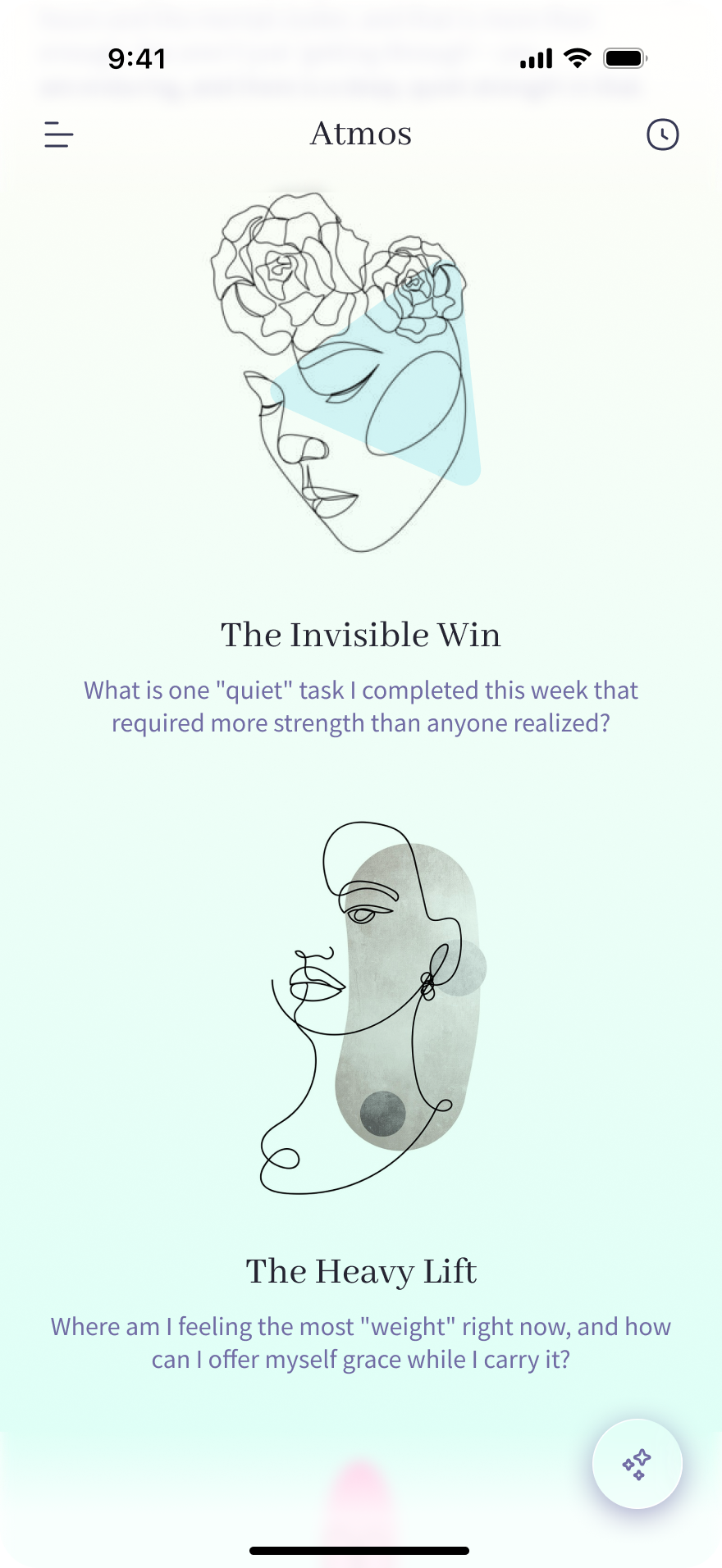
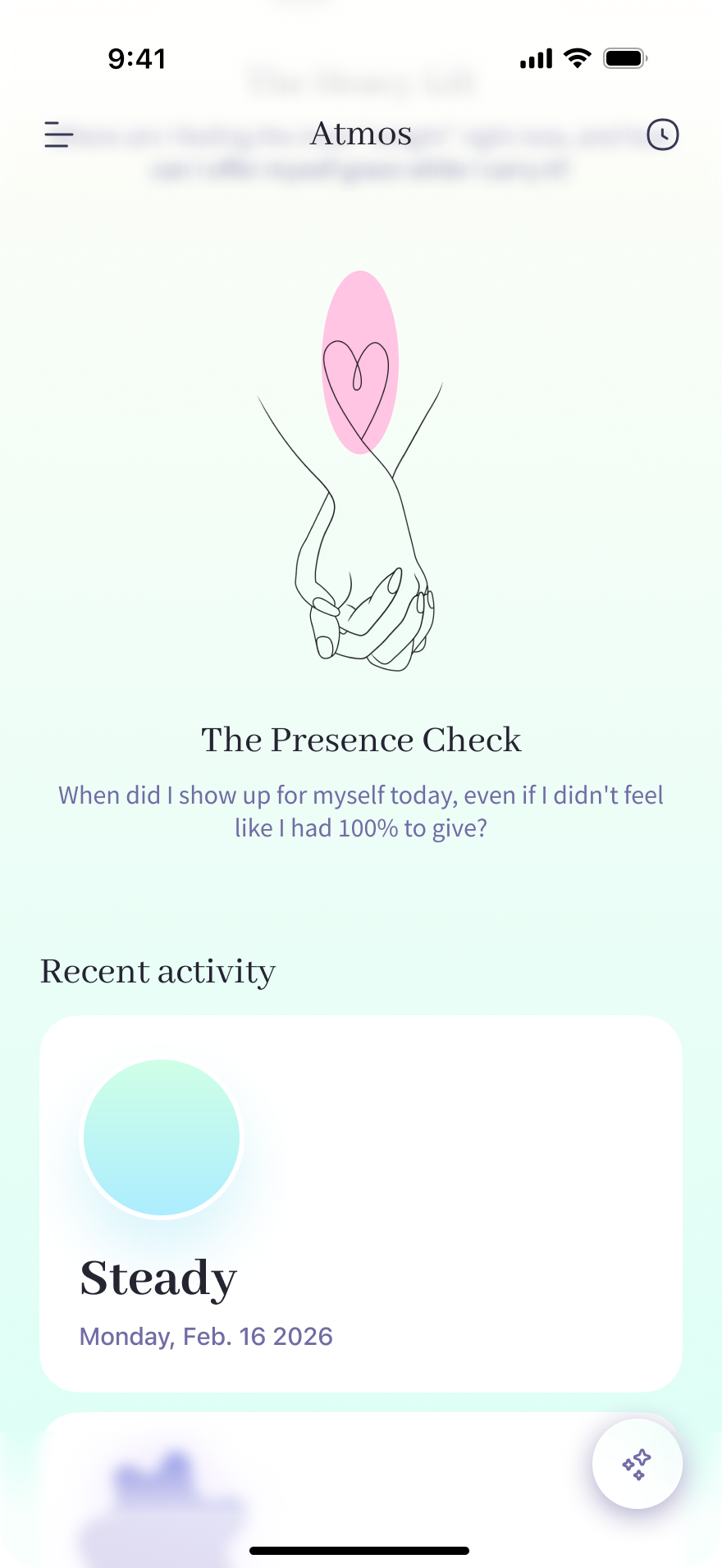
Atmos is a ninety-second ritual on a single screen: breathe, shape, name, color, one haptic beat, an optional reflection, then a closing card. The orb is one continuous element that changes form as you go; every phase is a state, not a new screen.
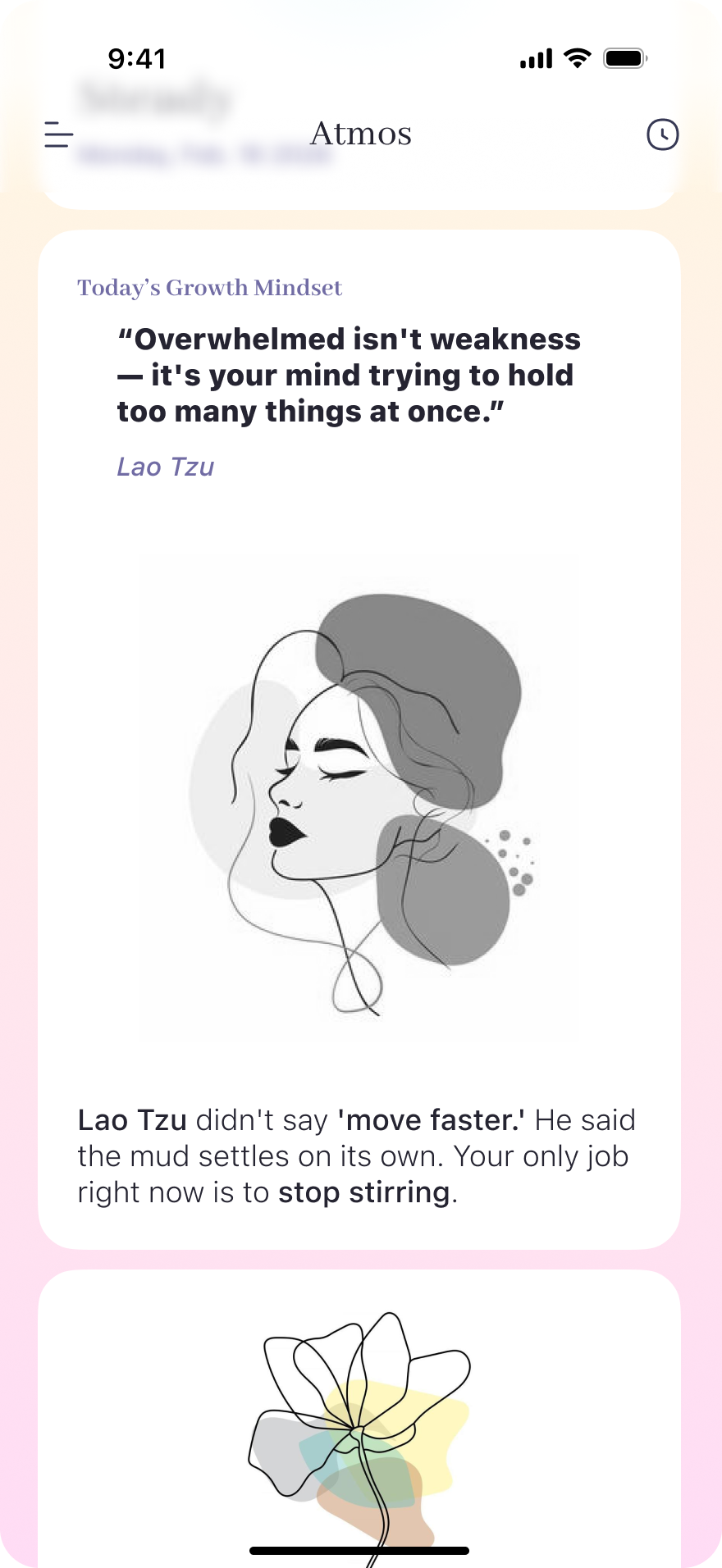
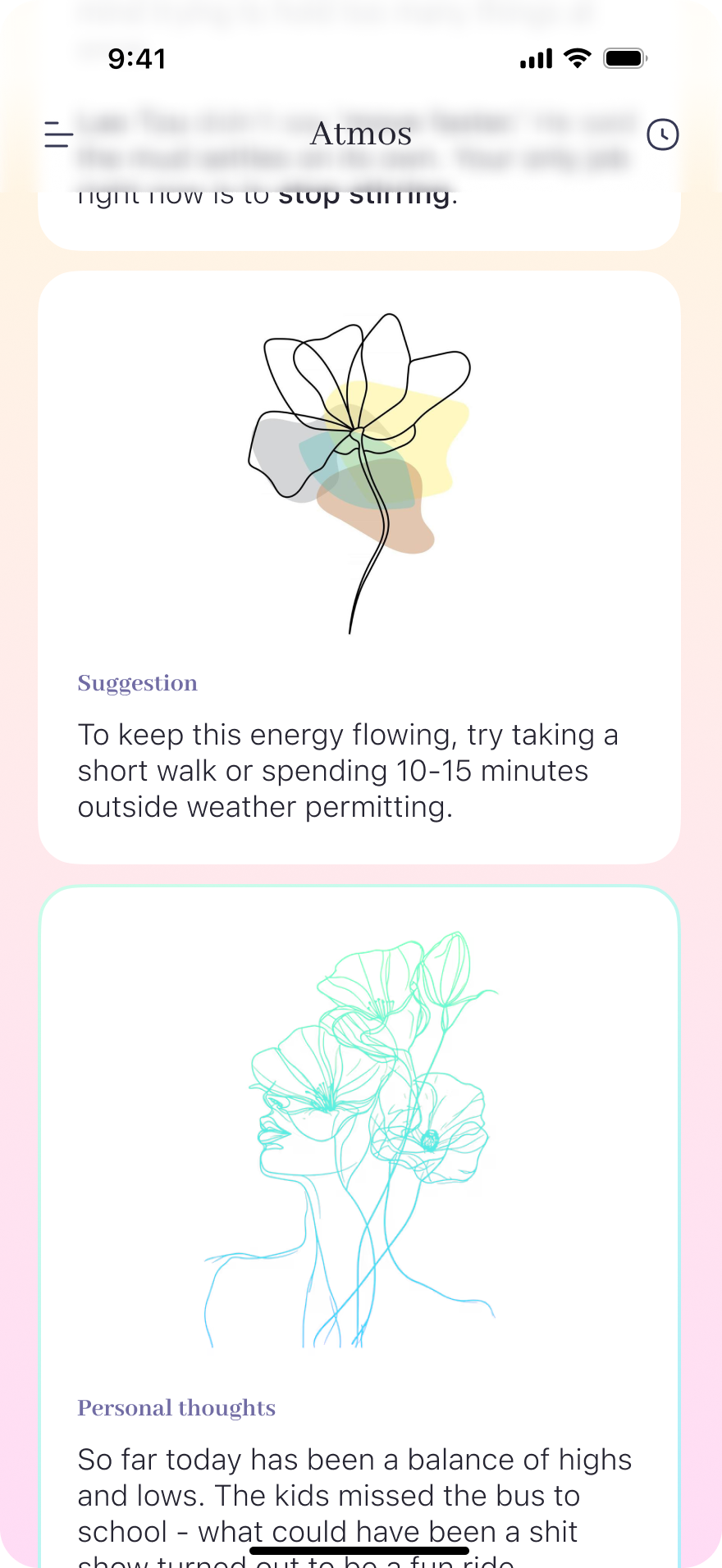
A small model suggests and never decides. It offers three names and three colors and writes a short reframe beside a line of wisdom, and you can always type your own word or pick your own color. In release builds its key stays on a server, never in the app, and if the network fails, a local fallback keeps the ritual working.
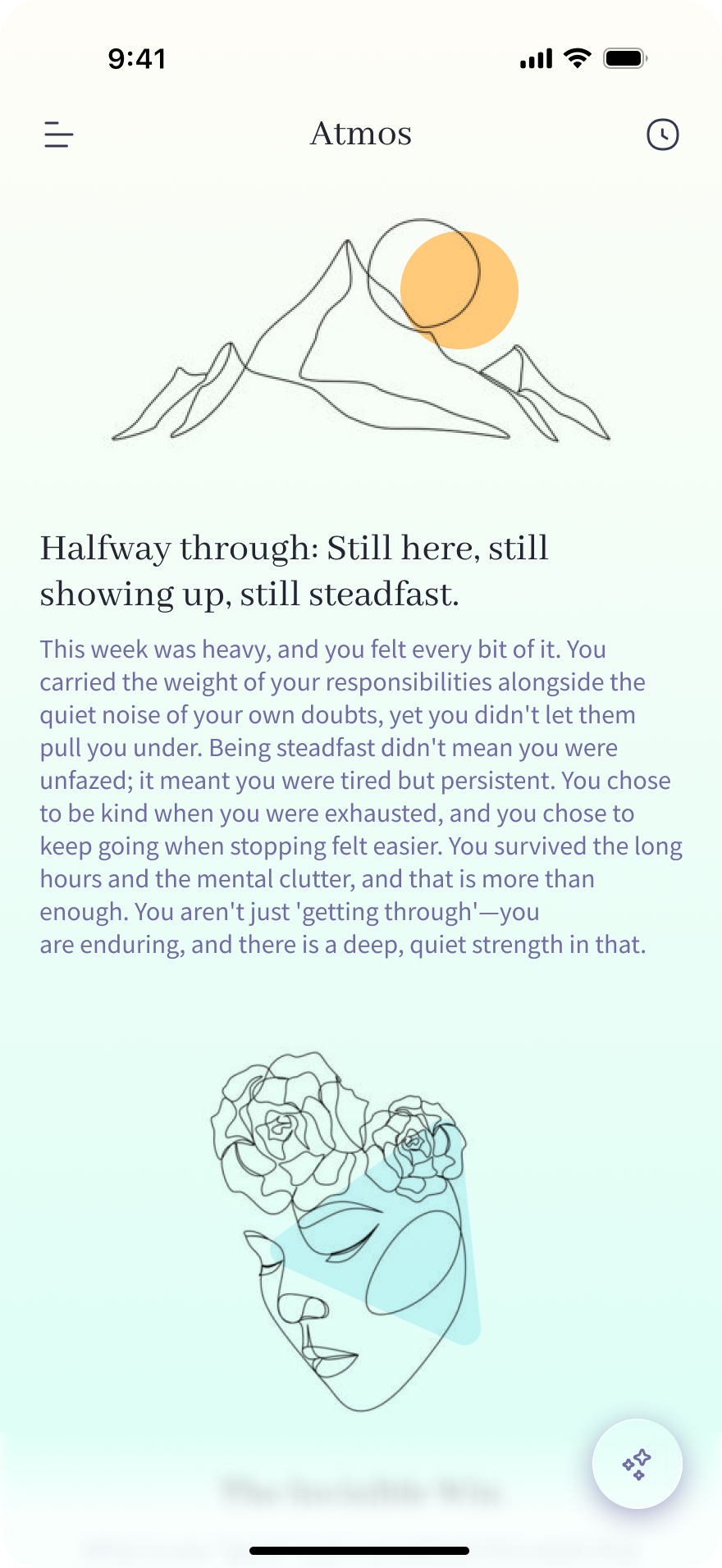
Everything stays on the phone: no account, no cloud. The safety layer is designed but not yet switched on. Sustained low check-ins or certain words in a reflection will raise an overlay that leads to the 988 Lifeline, a text line and an emergency contact, never a conversation with a model.

Takeaway
Slow is a feature. The parts of Atmos that work best do the least: an unlabeled slider, a one-minute breath, a word you chose yourself.
The hardest decisions were what not to build, and holding the release. Detecting distress and handing off to a human is only as good as the detection and the handoff, and I’m not qualified to judge either alone. So Atmos waits for a clinician. For a tool built for my own family, that is the only honest gate.